
SAPRO INSIGHTS · REVENUE CYCLE & FINANCIALS
Dental Insurance Recoupments: Which Provider and Claim Does a Payment Offset Belong To?
By Mitch Scott · 4-minute read
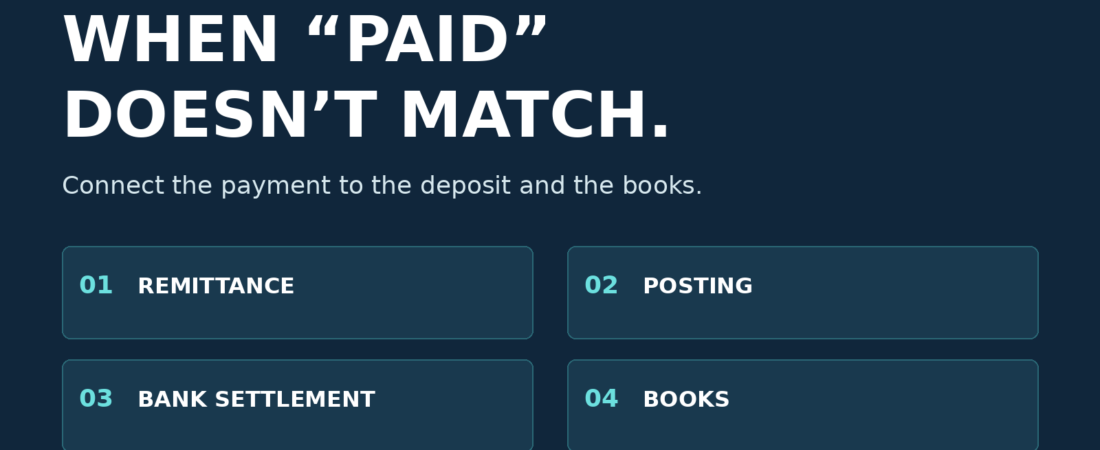
Imagine your daily deposit matches the remittance. The payment batch ties out. One line, however, is labeled “recovery,” and the notice does not clearly identify the provider and claim. The bank task is done; the reason for the recovery is not. Before closing that item, determine what the payer says it is recouping and whether the records support it.
A recovery line should not disappear into the day’s total simply because the deposit reconciles. Keep the line open until the payer’s explanation connects to the relevant provider, claim and adjustment records.
The American Dental Association recently reported member concerns about MetLife offsets allegedly involving overpayments made to other, unaffiliated dentists. The ADA also reported MetLife’s response: its current policy is not to offset one provider’s overpayment against an unrelated provider, and MetLife characterized the examples the ADA shared as isolated processing errors it had corrected. The ADA continues to monitor reports. This is a reason to examine an unclear recovery carefully. It is not evidence that every offset is wrong, that the practice has been affected, or that the issue is widespread.
Separate the deposit check from the recovery review
A bank reconciliation answers whether the deposit agrees with the remittance total. It does not explain every recovery line in that remittance. Ask both sets of questions:
- Does the deposit match the remittance total?
- What recovery or adjustment does the payer say it made?
- Which provider and claim does the payer identify?
- Do the stated reason, amount and related adjustments agree with the practice’s records?
Close the deposit task when it ties out. Keep the recovery unresolved if the second set of questions is still open.
Trace the recovery to its source
Start with the original remittance or recovery notice. Record the amount, stated reason, recovery method, named provider, claim reference and any related adjustment. Note the notice and remittance dates and identify the payer or recovery administrator shown on the documents.
If the explanation is incomplete, ask the payer for the missing details. The ADA advises dentists to ask why the alleged overpayment occurred, which provider it concerns, how it was calculated and what related claim adjustments apply. The ADA also says some recovery work may involve 6 Degrees Health; use the administrator named on the notice rather than assuming who handled it.
Compare the payer’s explanation with the practice’s own provider and claim records. Keep separate what the payer reported and what the practice has verified. An unfamiliar adjustment may have a valid explanation, such as a corrected claim, duplicate payment or another documented reason. Establish the connection before deciding how to post it.
Keep an unsupported recovery visible
If the recovery still does not connect to a provider and claim, mark it unresolved and assign an owner to obtain the missing explanation. Keep the source notice and remittance with a short follow-up record that includes:
- payer, amount, notice date and remittance date;
- reason and recovery method stated by the payer;
- provider and claim named in the notice;
- related claim or adjustment references;
- accountable owner, request date and next checkpoint;
- evidence that supports the eventual posting or closure.
Do not label an unexplained amount a confirmed overpayment, patient balance or completed adjustment without supporting evidence. When the payer responds, compare the answer with the original remittance and claim ledger. Record why the item was closed—or why it remains open.
Use the month-end review to spot patterns
At month end, review open recovery items by reason, payer and age, and total the dollars still unresolved. If the same reason recurs or the amount is material, bring the pattern to the office manager with the supporting notes and source records. The trend identifies what to investigate; it does not by itself prove an error or establish a payer-wide problem.
Count and age unresolved items consistently. Do not infer an error rate from a small or incomplete list. The review should make clear what is known, what is still unverified, who owns the next step and when the item returns for review.
Sources & Evidence
American Dental Association, “ADA responds to continued reports of MetLife offsetting payments owed to dentists” (November 2026). The ADA report describes member reports of alleged offsets, MetLife’s response, and questions affected dentists can ask. The ADA does not provide a frequency estimate or establish a broad payer practice. The workflow in this article is SAPRO’s proposed operating guidance; no client case, practice result, patient information or payer-specific finding is claimed.