
SAPRO INSIGHTS · OPERATIONS & FINANCIALS
Dental Practice Strategic Planning: Turn Year-End Decisions Into Work You Can Review
By Mitch Scott · 4-minute read
A hiring plan, an equipment quote, a payer review and a software evaluation can all sit on the same year-end agenda. But they may be open for very different reasons. One needs a decision. One needs better evidence. One no longer solves the problem it was meant to address.
Before you carry those priorities into next year, take one off the list and ask: What problem were we trying to solve, and what would make us act now?
Watch the SAPRO Operator Brief

What the ADA survey tells us about plans and actions
In its Q3 2026 report, the American Dental Association’s Health Policy Institute compared what responding owner dentists said they were likely to do at the end of 2025 with actions respondents reported taking by Q3 2026. For major equipment, 24.4% reported that a purchase was likely, while 16.1% reported making one by Q3. For new software, 16.9% said they were likely to invest, while 19.1% reported doing so by Q3.
The differences run in both directions. They come from separate survey questions and don’t track whether the same owners followed through. The action window also ends before year-end. The figures can’t tell you why a decision changed or whether changing it was a mistake.
That distinction matters at your own review. A decision can be delayed because nobody took the next step, or because taking it no longer makes business sense. Find out which before treating the delay as a performance problem.
Recheck the problem before carrying the decision forward
Hiring. If the goal is to see more patients, start with the appointment book. Separate staff-supported hours available for appointments from hours booked and visits actually completed. If available time is already going unused, find out whether demand, booking delays or schedule design explains it. If demand exists and the practice can’t staff the time, a hire may still address the constraint. Read more about evaluating a dental staffing decision.
Equipment. Name the bottleneck the purchase is meant to remove. If the issue is downtime, review service history and interruptions. If it’s capacity, identify the work the practice could perform with the equipment and whether there’s demand for it. Review the cash outlay and ongoing costs separately. An investment may be justified by reliability or quality even when incremental revenue is uncertain.
Payer participation. Review actual collections, payment timing, administrative work and what a change could mean for patient access. Confirm the applicable contract terms before deciding. A headline fee comparison won’t answer all of those questions. See how local insurer concentration affects the fee conversation.
Software. Identify the handoff the team needs to improve and what a successful test would show. For instance, if follow-up items go unassigned, check whether the existing system can route them to the right person before evaluating a replacement. If a new tool is warranted, plan for configuration, training and exception handling alongside the purchase.
Run the review around a decision
Ask for one short record for each priority that stays on the plan:
- Problem and evidence. What is happening, and what records show it?
- Next action. What can the team complete before the next review?
- Accountable owner. Who will bring the evidence back and make sure the next decision happens? Name the people doing the work separately.
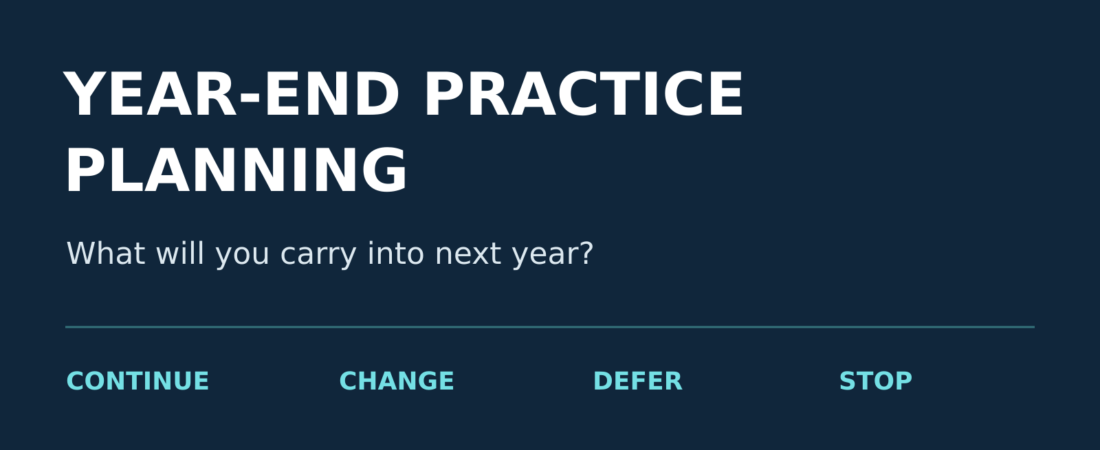
- Review date and decision rule. When will you decide, and what evidence would justify continuing, changing course, deferring or stopping?
A deliberate deferral has a reason and a trigger for reconsideration. If the practice is waiting for a vendor quote or a clearer cash forecast, record what it needs and when someone will check. If the original problem has gone away, close the decision and record why. Keep completed work separate from decisions closed by stopping or deferring.
Owner action: put one unresolved priority on the next agenda
Name the practice owner or one designated operating lead to own the review. Ask the practice manager, workstream lead and bookkeeper for the relevant records, and involve the clinical lead when a decision affects care. Leave the meeting with a disposition or a named action and review date. If the practice implements a change, compare the same measure over comparable periods and record other changes that might explain the result.
A year-end plan earns its place by helping you decide what to do next. SAPRO helps independent dental owners connect nonclinical execution, financial visibility and accountable follow-through while retaining ownership and clinical authority.
Request a free initial practice operational assessment.
Sources & Evidence
- ADA Health Policy Institute, Q3 2026 State of the U.S. Dental Economy, slide 19 and methods slides 41 and 45. Survey findings describe aggregate responses. The operating review is SAPRO’s recommendation, and no SAPRO or client results are presented.